 The system was never meant to save anyone—and Daredevil knows it. As Fisk eats in peace, Matt bleeds alone, and justice becomes a joke with a body count.
 Because when the system fails, the masks come back on.
Spoiler warning: if you haven’t watched Episode 4 of Daredevil: Born Again, go do that first, then come back. We’re about to get into trauma, blood art, Daredevil’s guilt, Kingpin’s complicated marriage, Skrull conspiracies, and the birth of a new nightmare.
The System Is Broken, and So Is Matt
We open on the aftermath of failure — plastic and paperwork and silence. An evidence bag, center frame. A body on a slab. Hector Ayala, White Tiger, is dead. And the cops couldn’t even be bothered to find the bullet casing, because to them he isn’t a victim or a hero. He’s a “cop killer.”
Matt Murdock knows better. He knows Hector died protecting people, and he knows the system is already closing the case like a dirty footnote. You can see the restraint slipping in his face. He tells Hector’s niece, “Someone will find his killer” — but you can hear the truth in what he doesn’t say. He means himself. He means Daredevil. And just like that the episode has you, because it’s no longer a question of if Matt puts the mask back on. It’s how soon.
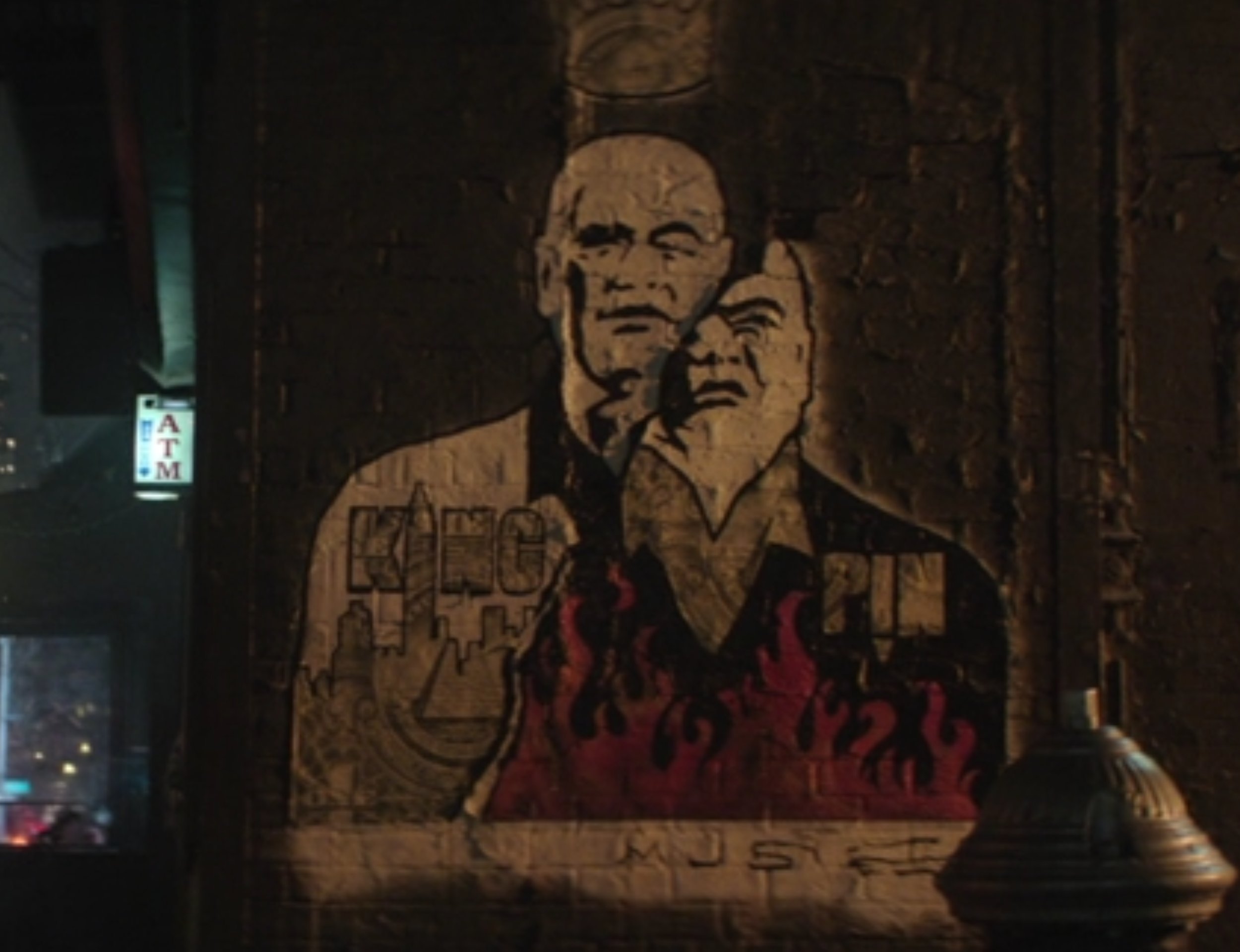
Then we cut to the walls, where the city is already telling its own story. A massive street-art piece of Wilson Fisk shows his dual identity at once — mayor and crime lord, the money-patterned suit blending into the flames of the underworld, the word KING over the skyline, PIN buried in fire. And down in the corner, a signature: Muse. His work has been in the background all season; now it’s front and center, a message scrawled across the city — we know who you are, Fisk. We see you.
The Street Art That Bleeds
The Kingpin mural was a warning shot, a reminder that no matter how hard Fisk plays the respectable mayor, his past is painted onto the walls of the city. But Muse isn’t just sending a message. He’s making a statement.
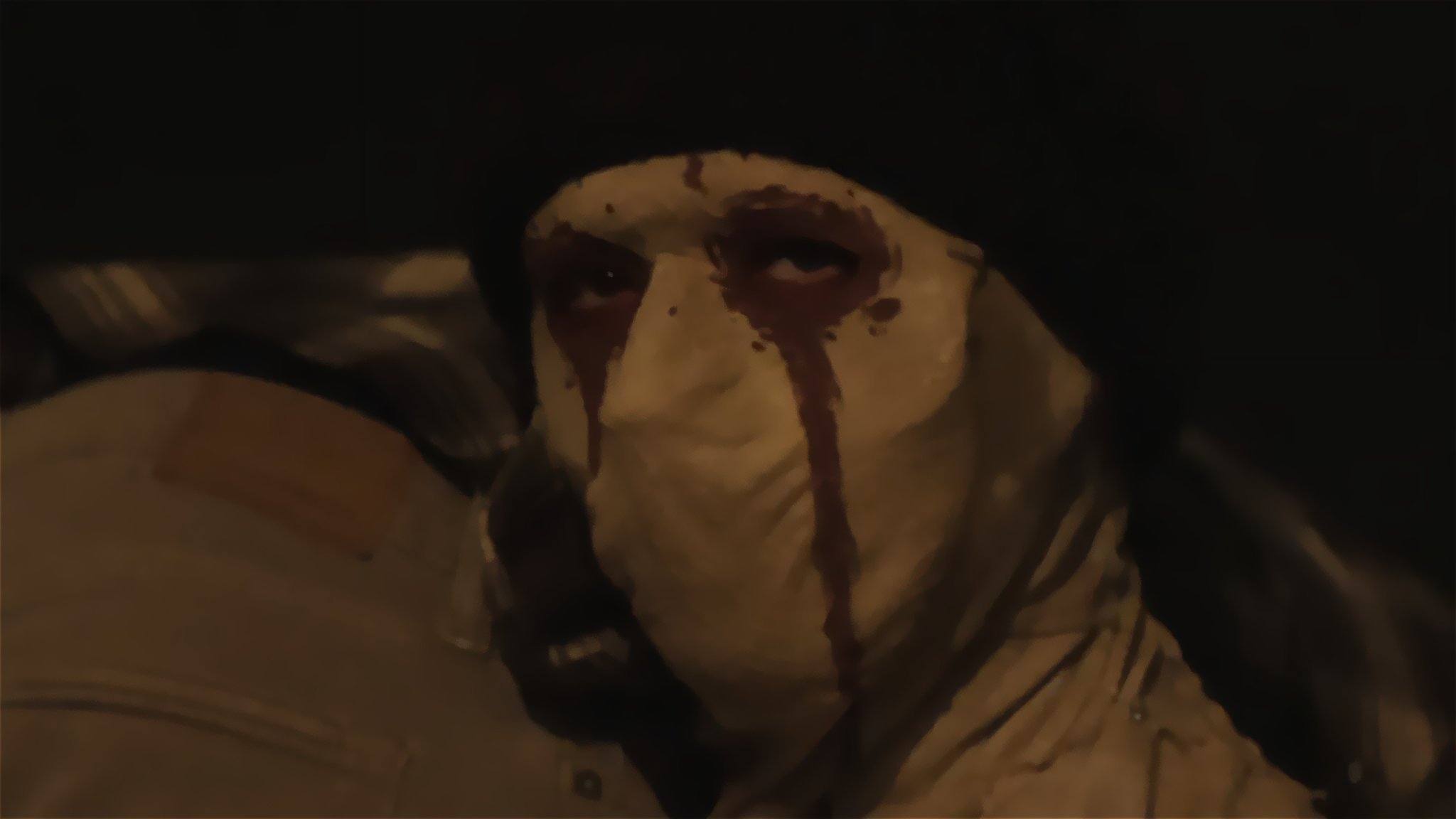
We cut from the two-faced mural straight to the bleeding-eyed mask moving through the subway. The body he’s carrying isn’t struggling, isn’t moving — it’s just a canvas. Muse doesn’t kill so much as create, and the way the scene is framed, with no dialogue and no sound beyond the rumble of the train, tells us everything we need to know. He doesn’t have to say anything; his work does the talking, and Hell’s Kitchen is about to become his gallery.
It’s one of the most unsettling villain introductions in the MCU precisely because it skips the theatrics — no monologue, no standoff, just a quiet, methodical act of horror. We don’t know who the body is or what he’s planning. We only know he’s been leaving his signature all season, that this was never random, and that he’s finally stepping into the light. The question isn’t what he wants. It’s who’s next.
The Skrull, the Journalist, and the Club That Talked Too Much
Let’s rewind. Before Daniel found himself in front of Fisk’s very dangerous desk, he was out partying at a gay club with BB. Which, on its own, is fine — party on, my guy. The problem is that BB is a journalist, and BB does not stop listening.
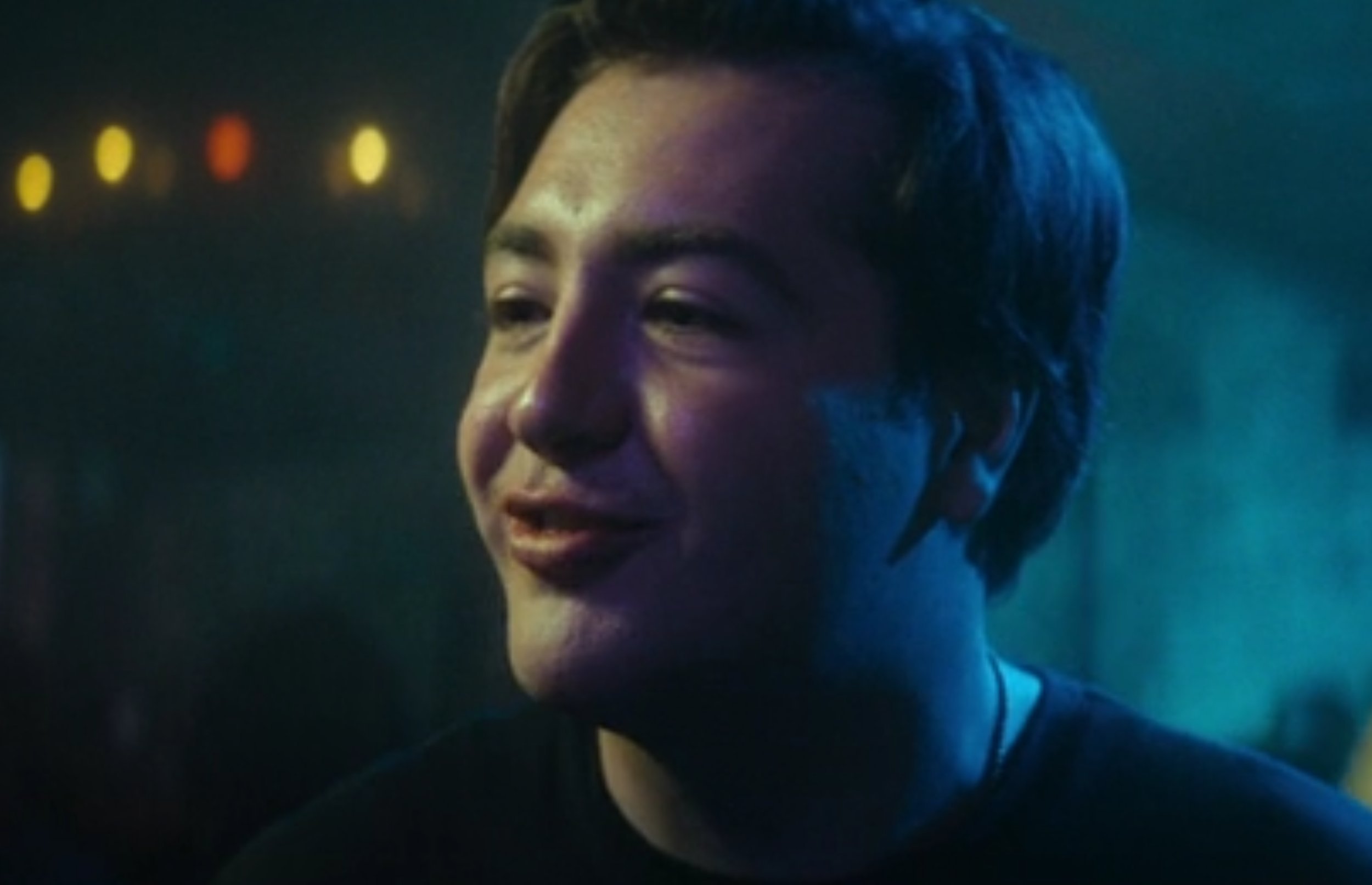
Daniel gets too drunk and too loose-lipped, and somewhere between the shots and the dancing he lets something slip about a corporate recycling project Fisk is pushing to solve the trash strike. Harmless? Hardly — BB runs with it, and suddenly the press is calling Fisk a union buster. That’s not bad optics, that’s political napalm.
Oh, and one more thing: in the comics, Daniel Blake was a martian, a shapeshifting alien who infiltrated government ranks. So maybe — just maybe — this isn’t only about loose lips. Maybe Daniel isn’t a loyal young political hopeful with a drinking problem; maybe he’s a Skrull, laying the groundwork for a much bigger infiltration. Probably not. But then again, they did say “Skrulls” out loud this episode. Just saying.
Kingpin’s World: Love, Lies, and Loyalty Tests
Wilson Fisk is trying to be someone new — mayor, public figure, a man with power that doesn’t come from fear and bloodshed. But power always comes with a cost, and this episode the cost is Vanessa.
They sit in front of their therapist, and the conversation is polite, measured, controlled — and underneath, it’s war. Fisk is furious that Vanessa moved on at all, and she doesn’t back down: “I didn’t know if you were ever coming back.” Then the gut punch — “My father used to disappear for weeks at a time. You left. Just like he did.” That’s the shift. For all his calculation and control, Fisk never saw this coming; he never thought she’d compare him to the man who abandoned her, and for a second he looks genuinely hurt. And then he lets it slip: “I had a conversation with Adam.” The tension snaps. The therapist tenses. Vanessa doesn’t even ask what happened — she already knows, and instead of fear, she just accepts it.
Later the therapist pulls her aside and asks, quietly, “Do you feel safe?” Vanessa’s answer: “Wilson Fisk is not capable of hurting me.” That’s chilling, because it isn’t the denial of someone who can’t see the danger. It’s the certainty of someone who has already chosen her side.
Meanwhile, Fisk has a different betrayal to handle. He calls his whole team into the room — no yelling, no accusations, but everyone knows what’s coming. The press got the union-busting story, and someone here let it slip. Fisk leans forward, calm: “Which one of you failed me?” His chief aide cuts in fast, shielding Daniel — “He’s mine. I’ll take whatever punishment.” That only makes Fisk more interested: “You’re going to go down with the ship? That’s fine.” Everyone’s waiting for the execution. And then Daniel speaks up, and does something no one expected.
“It was me. I got drunk, I ran my mouth, I screwed up. I know I’ll be fired. I deserve it. But even after you fire me, I’ll still be your biggest supporter. This was a once-in-a-lifetime opportunity, and I know I lost it. But I still believe in you, Mr. Fisk.”
That’s when everything shifts. This isn’t begging, and it isn’t excuses — it’s devotion. Fisk lets the silence sit, then: “Loyalty and courage… they’re not in large supply.” Daniel isn’t fired. But he isn’t quite safe either, because Fisk rewards loyalty and never forgets a mistake, and he makes that clear on the way out: “If you ever slip up again… it will be the last thing you do.” A threat and a promise at once. We all know what it means. The question is whether Daniel does.
Because here’s the thing about Fisk: he tried to change, tried to be the man Vanessa wanted, tried to play the legitimate leader — but he is who he is. He handled Adam (who, it turns out, isn’t dead after all). He turned a mistake into a lesson in control. He’s still wielding power the only way he knows how. That Kingpin mural isn’t just street art. It’s the truth.
The Case That Doesn’t Matter (Except It Does)
Some cases change the world. Some change the system. And some are just about one man who got screwed over.
Matt’s partner Kirsten asks him to take a freebie — small-time, a guy caught stealing food. Matt says yes, which probably isn’t the smart financial call given the hints that the firm is struggling, but Matt doesn’t care. He always says yes to the people no one else will fight for.
He argues the DA into giving his guy ten more days. It’s not life or death, and yet it starts feeling bigger, because the DA isn’t simply giving in — there’s a push and pull that feels like we’re being led somewhere. Which, spoiler, we are. The real point of all of it is to get Matt inside the jail, so he and the corrupt cop from the trial can have Round 2.
Once he’s in, it turns hostile fast. Matt presses, provokes, pokes the bear over and over. The cop is already furious that Matt made him look bad before, and now he’s hunting for an excuse to take a shot. Matt knows it — and instead of backing down, he leans in: “You’d have to bring a few more next time, wouldn’t you?” That’s Sassy Matt at his best: cool, calculated, dangerous without throwing a punch. And it works. The cop snaps back, angry as hell, and accidentally lets slip that he had nothing to do with Hector’s murder. Matt knows he’s telling the truth.
Meanwhile, that “meaningless” freebie case starts hitting harder, because the guy isn’t some random thief. He had his benefits cut. He was starving. He stole food because the system would rather lock him up than help him — and he already knows how it ends: “It don’t matter anyway.” The system is a machine, and it grinds down people like him without ever slowing to notice. Matt can fight. The real question is whether he can ever actually win.
Matt and Frank: Rage Meets Regret in a Basement
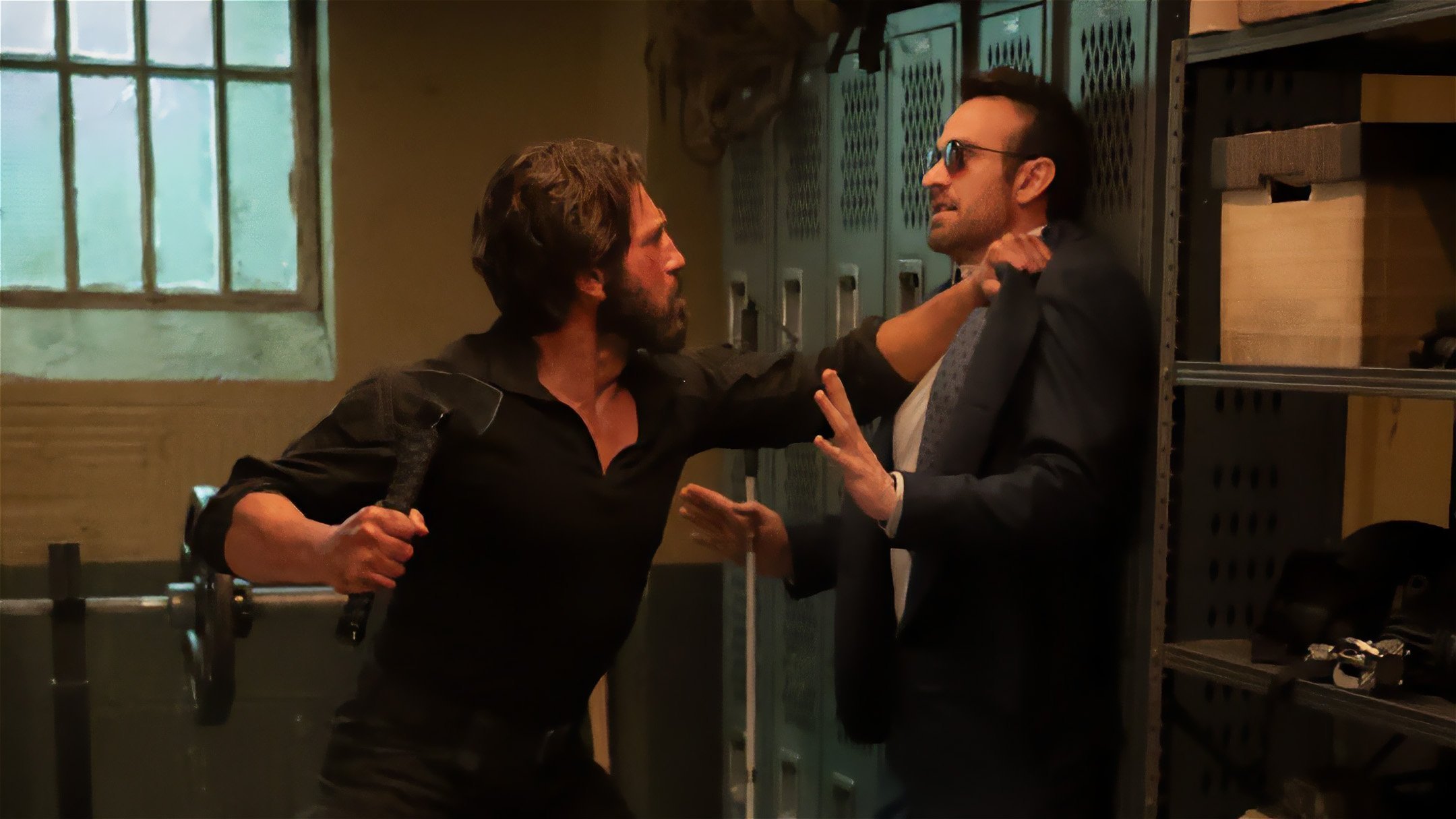
Matt needs answers. Hector’s dead, the cops didn’t do it, and that leaves only one name on the list. He follows the clues with his senses locked in — a bullet casing marked with the Punisher’s emblem, a trail of scent leading to a basement full of weapons and shadows. And then a hatchet flies at his head, because Frank Castle doesn’t do friendly visits.
Matt barely dodges; Frank barely cares. But the real fight here isn’t about fists, it’s a war of guilt and loss and how much pain a man can carry before it breaks him. Matt accuses him — he found the casing, after all — and Frank just laughs: “You think I did it? Nah. That’s just some asshole playing dress-up.” Matt knows he’s telling the truth, which means someone else is out there wearing Frank’s symbol and playing executioner. That doesn’t sit well with either of them.
Then Frank sees straight through him. “That guilt. That shame. That’s my home, Red.” He keeps going: “That friend of yours… did you save his life? You lost him, didn’t you?” Matt doesn’t answer. Frank leans in: “Say his name. Say his name, you coward.” And Matt starts crying — because this was never about Hector. It’s always been about Foggy.
That’s when Frank delivers the line that explains the whole Punisher, the words he still hears his own son saying: “Go get him, Daddy. You get every last single one of them.” Frank knows exactly what Matt is going through, because he hears Foggy the way Frank hears his son. He knows Matt is lying to himself, trying to live in a world where justice is fair. But it isn’t fair — and every second Matt hesitates, more people die.
Finally Matt speaks: “Foggy Nelson was the kindest, purest soul I ever met. We can work a lifetime and never get to his decency.” Then he turns to leave, because Frank won’t give him the closure he wants, won’t let him keep lying to himself — and because Matt already knows what he has to do.
Two Men, Two Paths, the Same Destination
Back home, Matt just stares at first — at his weapons, his old life, the identity he’s been running from since Foggy died. Then he picks them up and starts moving. Practicing, spinning, hitting. The first strikes are hesitant, then faster, stronger, sharper, until the rhythm is back. Daredevil is back, and Matt knows it. The moment he picks up those sticks, the moment he starts moving like a fighter again, it’s already over. He’s back in the war.
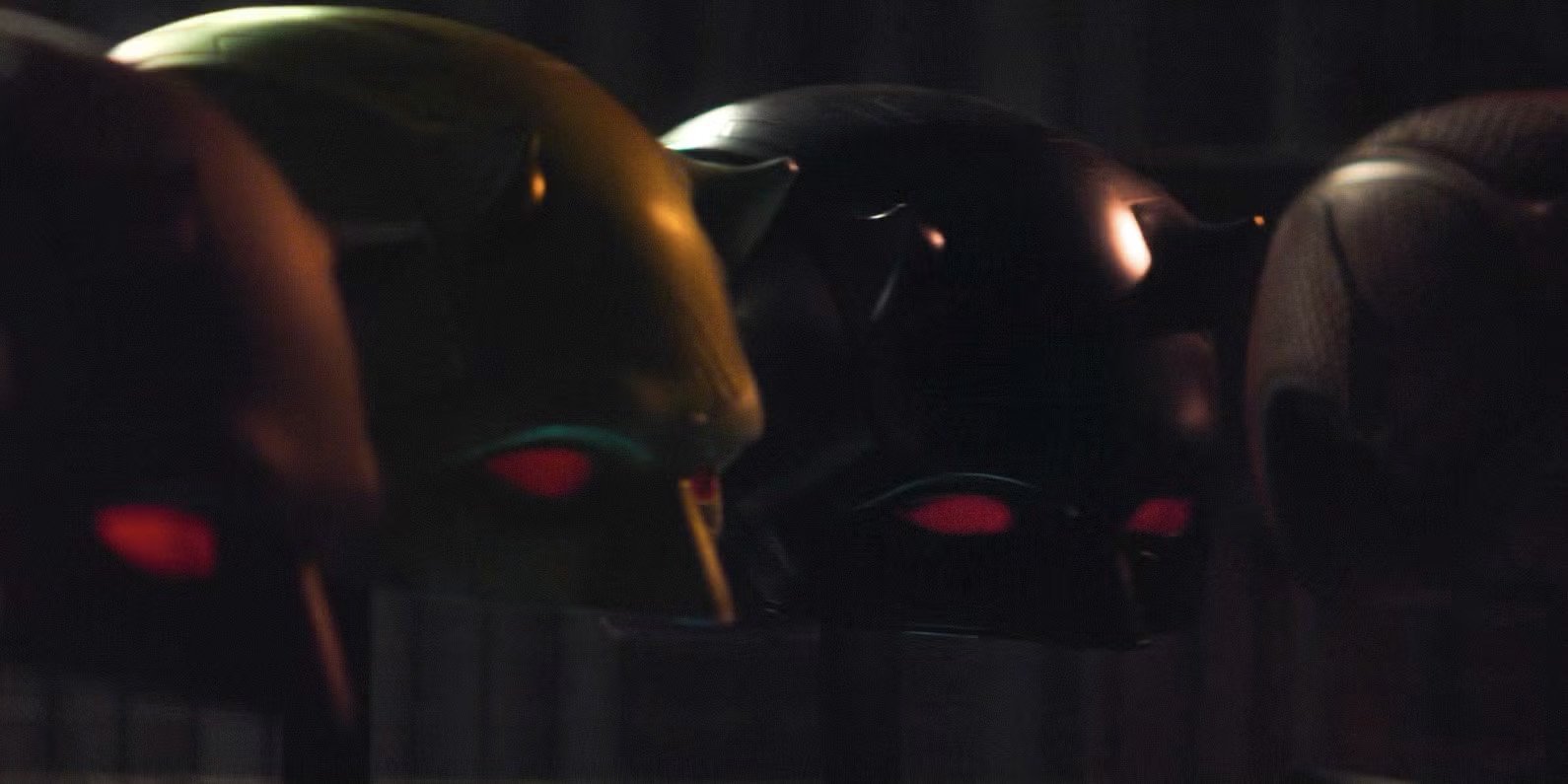
Fisk doesn’t need to practice; he never stopped being who he is, he just pretended for a while. So he stops pretending. Adam — Vanessa’s former lover — sits locked up in front of a perfect meal, and Fisk doesn’t yell or threaten. He just sits and enjoys his dinner while Adam screams. That’s the lesson: power isn’t only brute force, it’s making someone know they’ve lost and there’s nothing they can do about it.
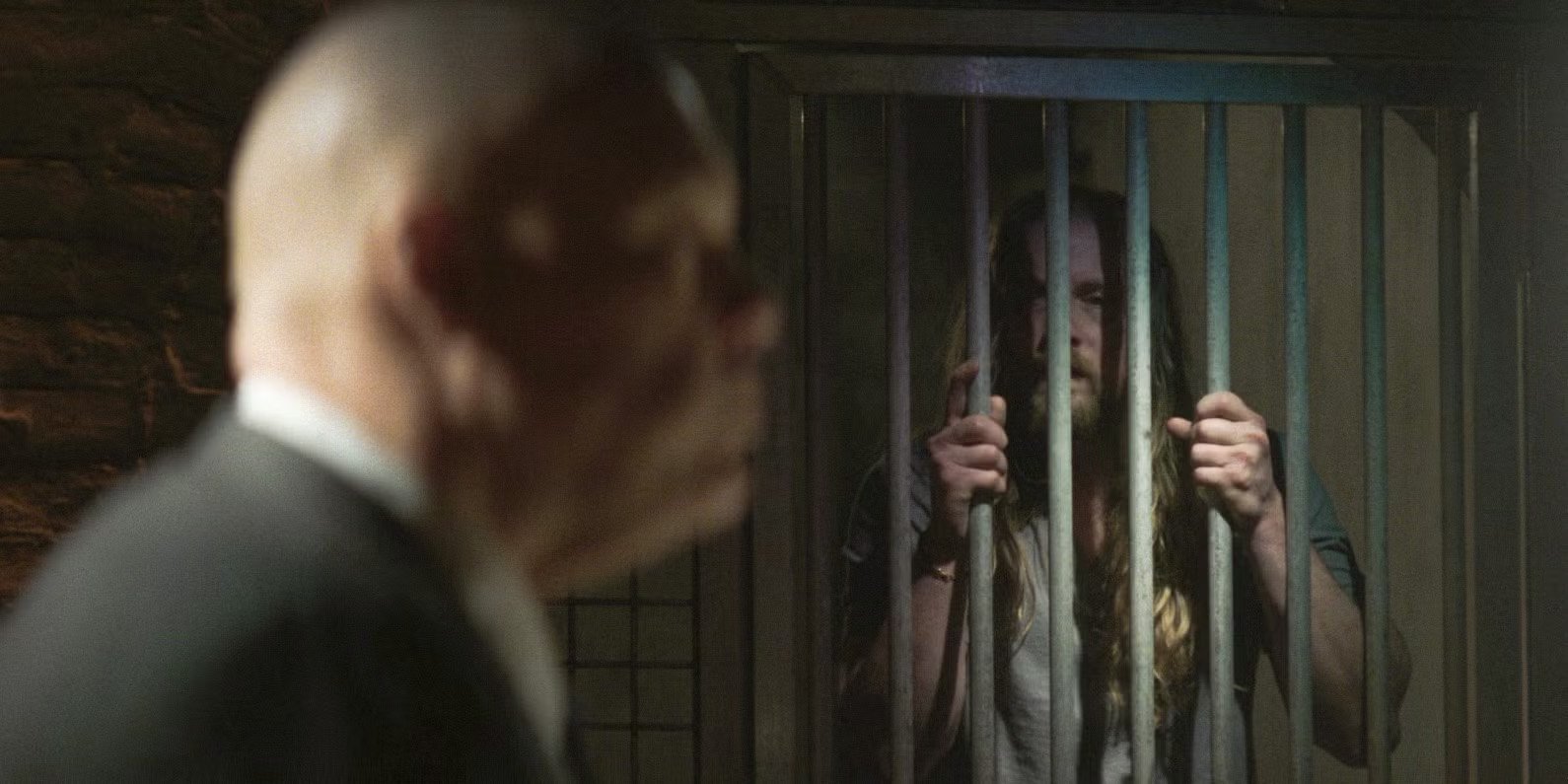
Matt is practicing. Fisk is eating. Both of them are sliding back into who they really are, because no matter how hard they tried, neither one can escape it.
The Final Scene: Muse’s Horrific Canvas
Just when the episode seems ready to roll credits, the real horror begins — no words, no explanation, just blood and art. The camera cuts to a dark, quiet space, a dim light flickering, shadows stretching across the walls. And in the middle of it: Muse.
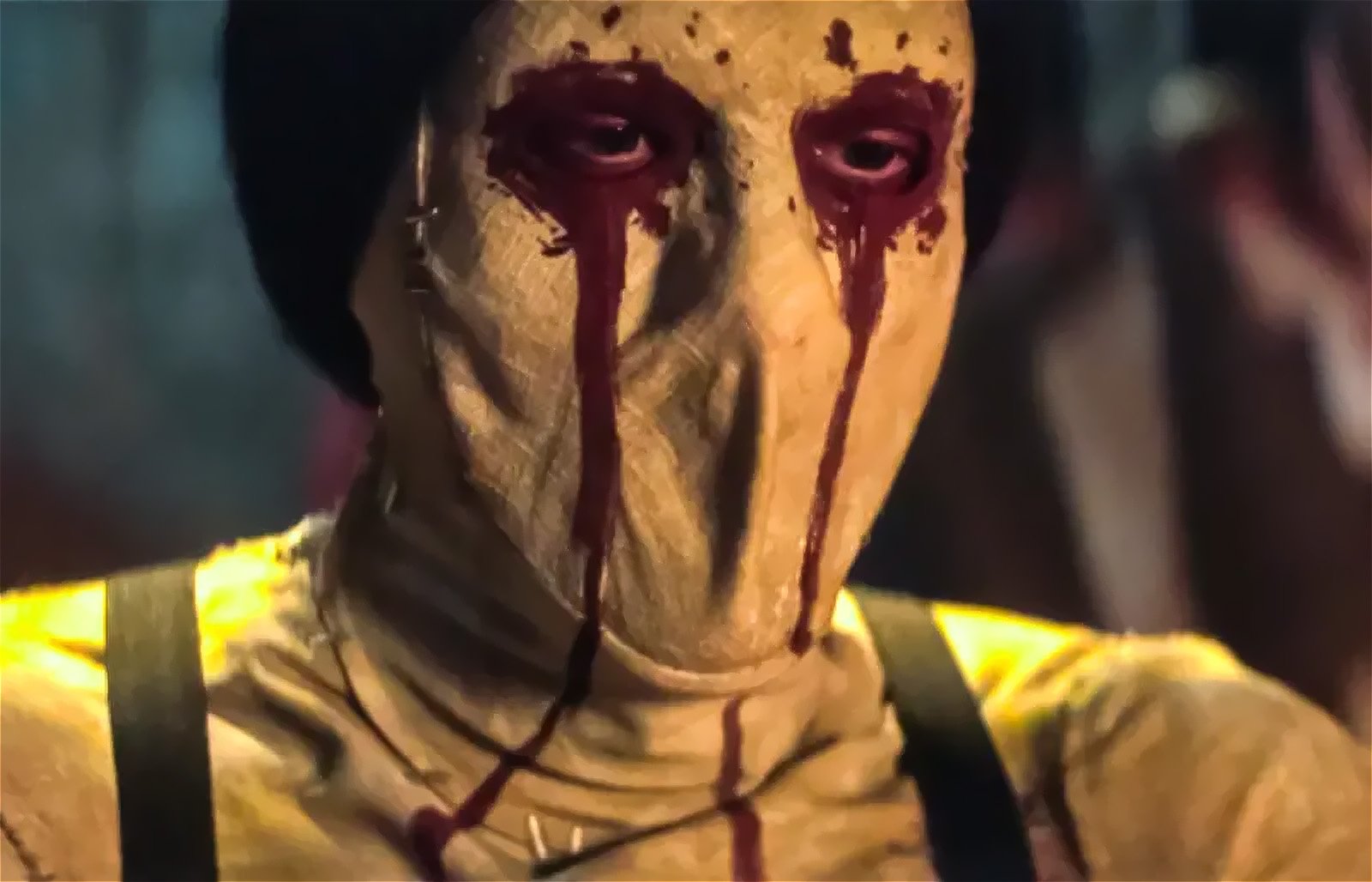
We’ve seen his signature in every episode. We saw him silently dragging a body earlier. Now we see what he does with them. He’s in his workshop, and in front of him is a man strapped down, veins exposed. He isn’t torturing him, and he isn’t killing him for information. He’s extracting his blood — and using it, for art.
This isn’t Fisk controlling his enemies, or Matt fighting to protect people, or even the Punisher dealing out his own brand of justice. This is something else. Muse sees people as materials. He doesn’t talk, doesn’t monologue, he just creates. And in that final lingering shot the realization lands: this isn’t another street criminal, this is an artist — and the city is his canvas.
The episode ends on one last chilling note. We don’t know who his victim is, or what he’s planning. All we know is that Hell’s Kitchen has a new monster, and he’s just getting started.