 Born Again’s one-shot fight is a character confession wrapped in fists and shadows.
 Spoilers ahead. Seriously — go watch Daredevil: Born Again, Episode 5. I’ll wait.
Because what aired wasn’t an episode. It was a resurrection.
Somewhere along the way we lost the one-shot: the self-contained hour that ignores the season arc, the multiverse, and the CGI threat in the sky, and just traps a few characters in a room — figure it out, or bleed trying. Streaming buried that form years ago. Episode 5 dug it up, dusted it off, and put brass knuckles on it.
It isn’t a breather, and it isn’t nostalgia. It’s a reminder that character doesn’t live in the finale or the exposition dump — it lives in the small, split-second choices that show you who someone really is. Streaming may have killed the filler episode. Daredevil just buried the body with interest.
The One-Shot Is Dead. Or It Was.
Television used to have seasons longer than a CVS receipt — twenty-two episodes, sometimes more. Not all of them were bangers. Some were slow, some were weird, some were about alien viruses turning people into bees (X-Files, I’m looking at you). But buried in those so-called filler episodes was the real meat: the emotional connective tissue, the slow-burn character work that made us care.
You didn’t fall in love with Stargate SG-1 because of the big Goa’uld war arc. You fell in love because Jack O’Neill made a dumb joke in the middle of a crisis, because Teal’c raised an eyebrow, because of the quiet moments that told you who these people were when no one was watching.
Now we get eight-episode seasons that sprint from pilot to finale like the script is double-parked — shows afraid to pause, to breathe, to let a character occupy space that doesn’t move the plot forward. By the time I start to care, the show’s already cancelled. Gone, ghosted, a sad title card in my “Continue Watching” graveyard.
Episode 5 brought the one-shot back from the dead, and it came back swinging. That’s not nostalgia — it’s proof that small stakes can carry big weight when you do it right.
A Love Letter to the Classic Format
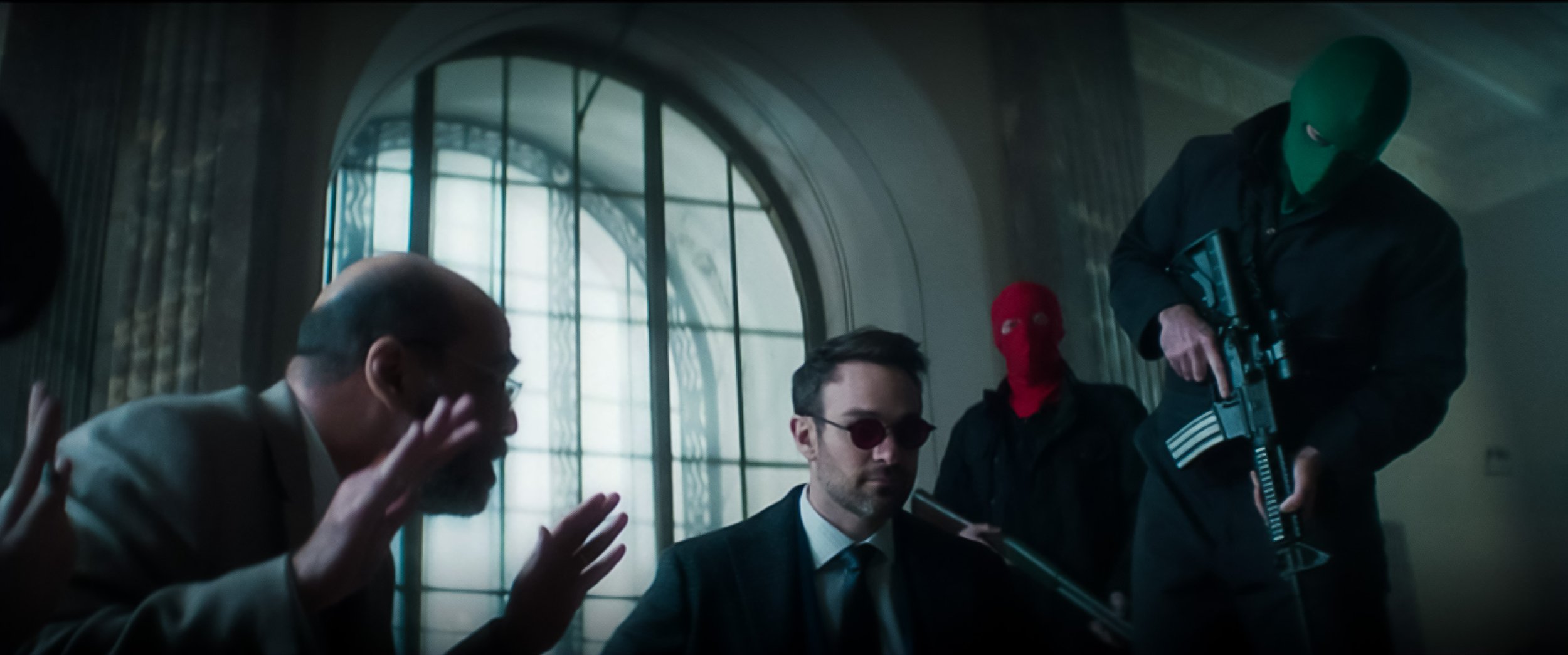
Episode 5 doesn’t care about your plot threads. No Kingpin scheming, no Muse painting with bodily fluids (thank god), no secret Skrull conspiracy humming in the background — just a bank, a bad guy, and a ticking clock. And Matt Murdock, quietly walking into a hostage situation without a mask, without backup, without a plan, because he can’t not help.
This is Die Hard meets Law & Order, with Catholic guilt and echolocation. Tight, intimate, the kind of episode that used to be standard and now feels like a minor miracle. For one hour the show forgets it’s part of a franchise — forgets the meta-narrative, the Marvel checklist, the pressure to tee up the next six spin-offs — and just tells a complete, self-contained story that could have aired in 2003 and hit just as hard.
And because it isn’t trying to do everything, it does one thing really well: it reminds us why we love Matt Murdock. Not because he’s Daredevil, but because even without the suit he still walks straight into hell with nothing but stubbornness, sarcasm, and the need to make things right.
Character Work Is the Real Superpower
Strip away the horns, the red armor, the rooftop acrobatics, and what’s left is a man in a button-down shirt walking into a robbery, reading heartbeats like sheet music, outmaneuvering a room full of armed criminals with nothing but empathy and audacity. That’s the superpower.
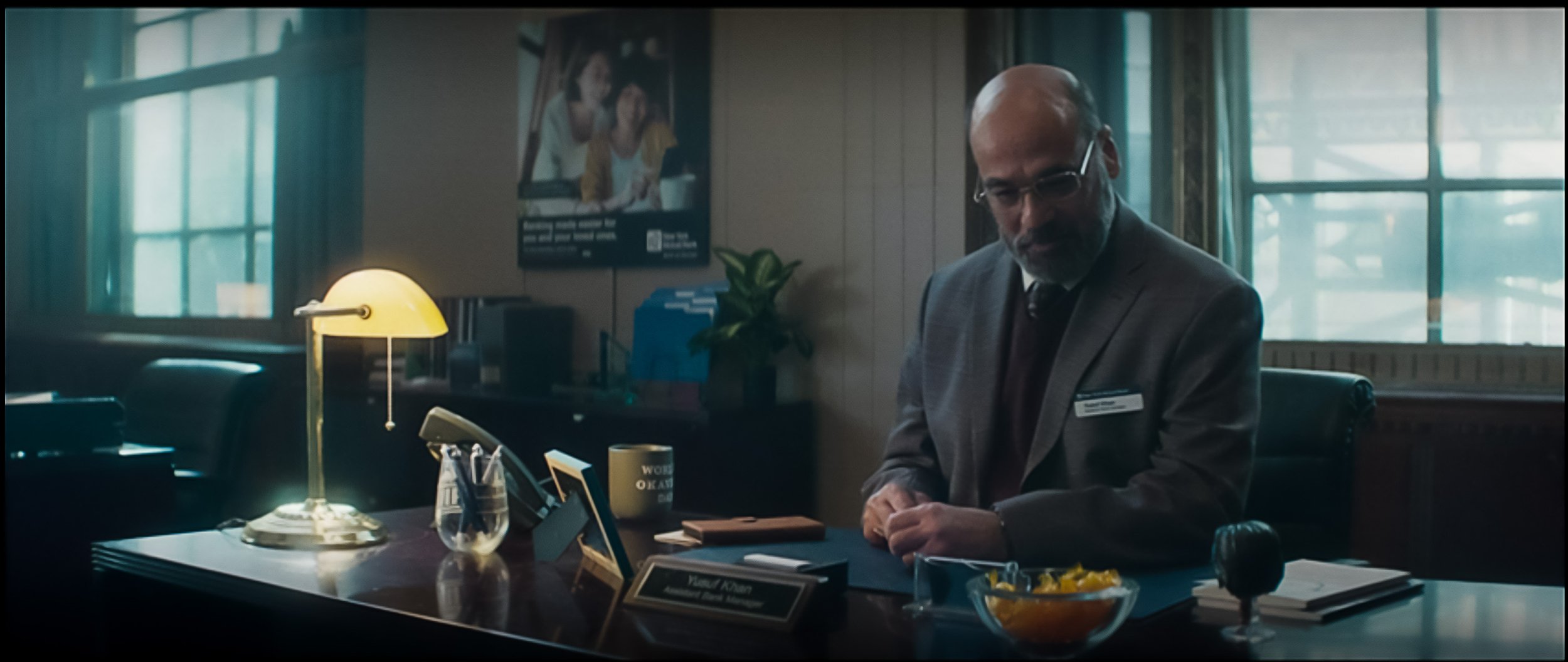
But it isn’t a solo act, and Yusuf Khan deserves his flowers. He’s the guy we could’ve lost in the shuffle: assistant bank manager, MCU cameo, there to deliver bad news and duck for cover. Except he’s got depth, and grit, and that quiet exhausted dignity that says I’m afraid, but I’m still standing.
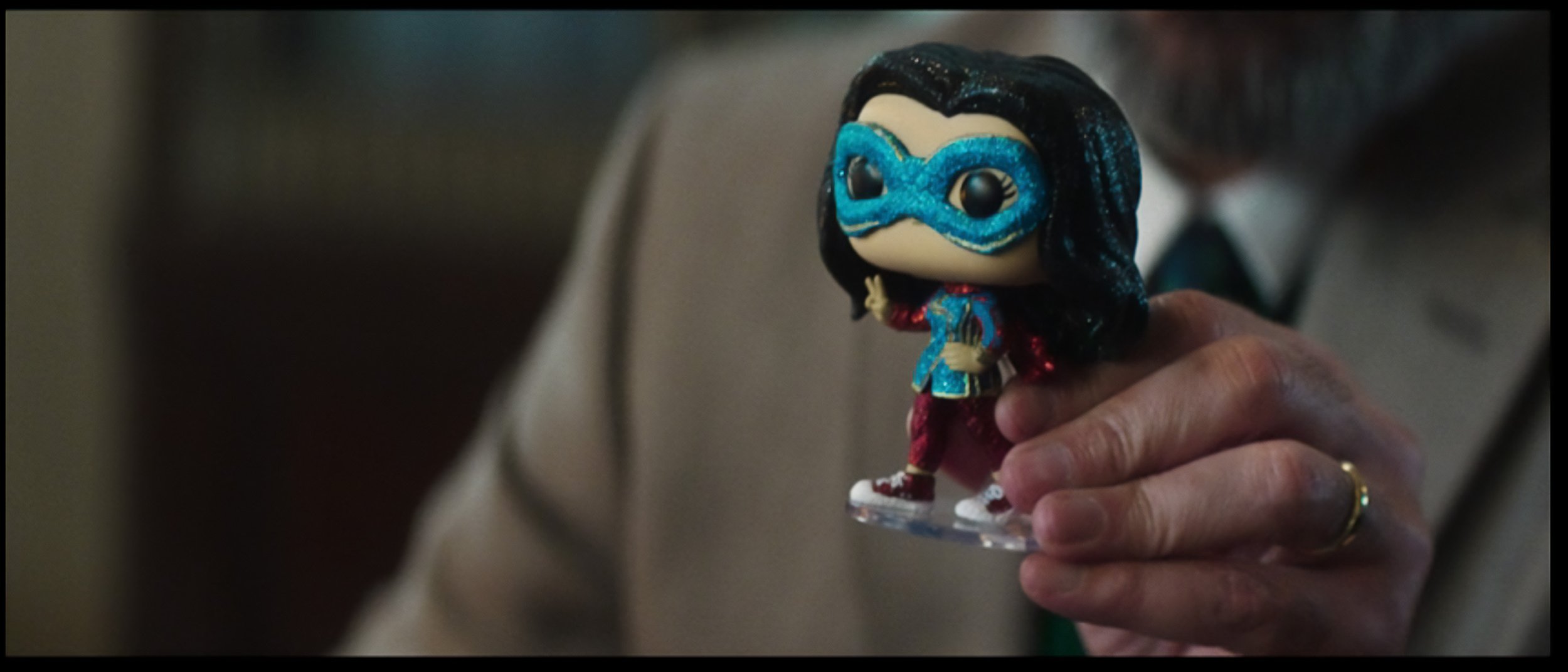
Early on, Yusuf’s trying to connect — pulling out trivia, cracking jokes, showing off his Ms. Marvel Funko Pop (a low-key continuity win) while he gently tells Matt the bank can’t give his struggling firm a loan. It’s not personal, it’s the system, and you can feel how much he hates saying it.
Then the robbers storm in, and Yusuf doesn’t crumble. He lies — says he can open the vault when he can’t — because stalling might save lives. When Matt gives him a subtle cue to keep stalling, he doesn’t ask questions; he trusts him. And when the moment comes, gun cocked and execution close enough to smell, Yusuf doesn’t beg and doesn’t snivel. He stands there, bracing. And Matt shows up, just in time.
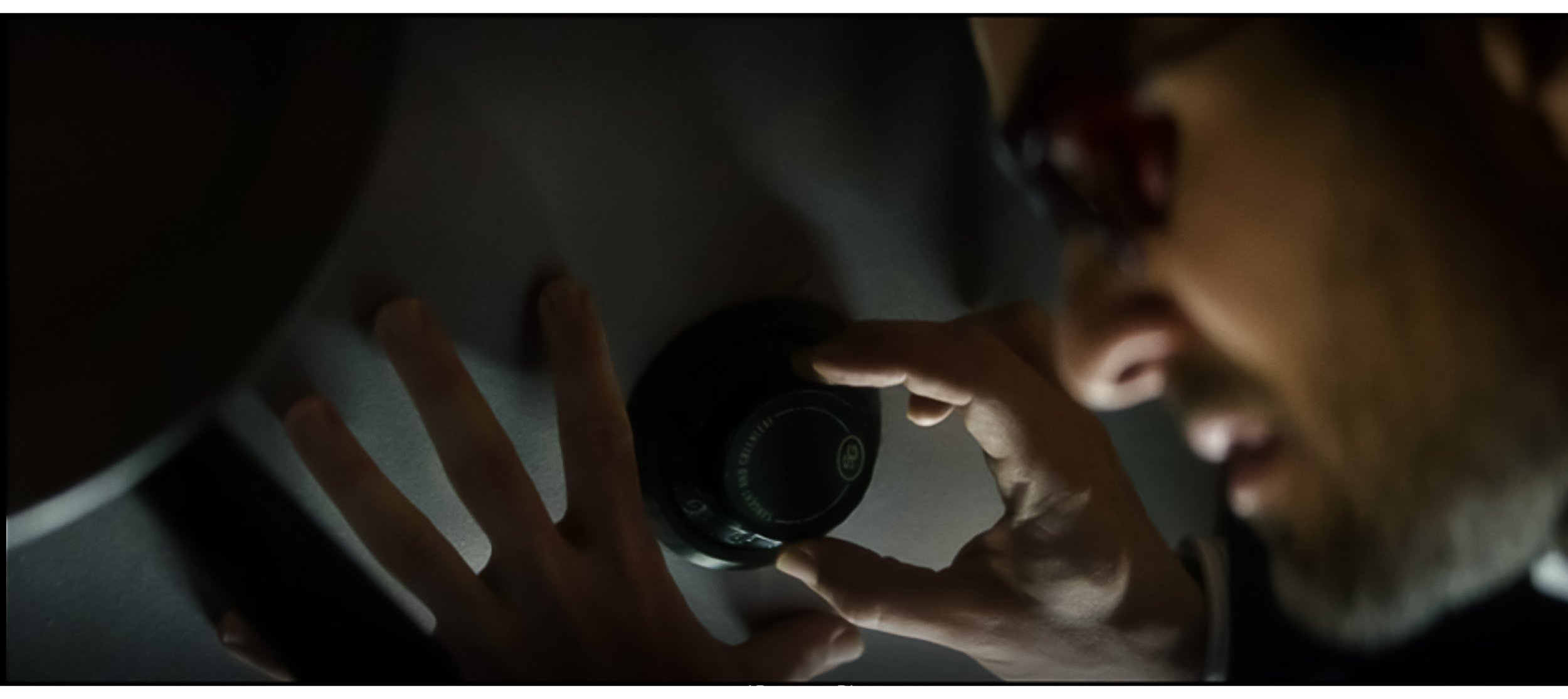
That’s courage — heroism with no mask on. Matt saves Yusuf, but Yusuf saved the hostages first, buying them the only currency that matters in a Daredevil episode: time.
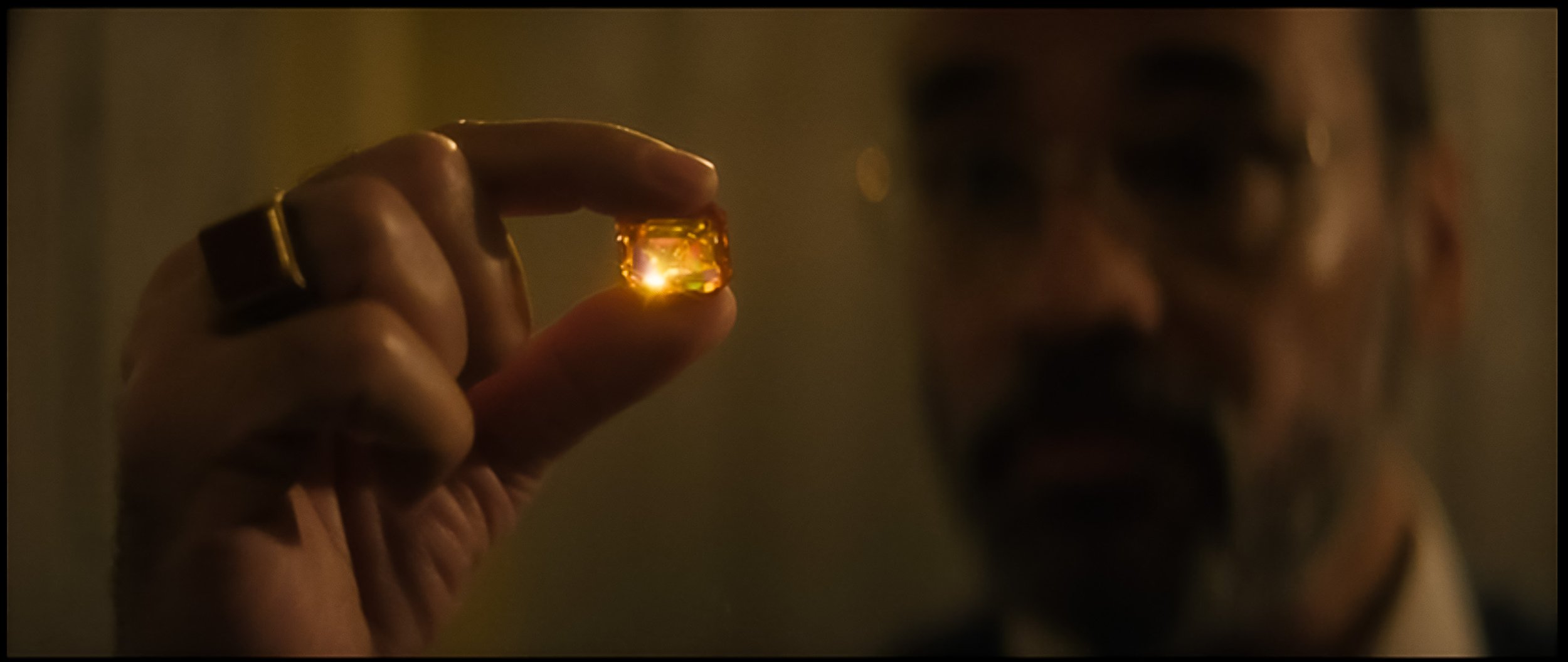
At the end, when the dust settles and the diamond’s back, Yusuf invites Matt to dinner. Not because he owes him — because he sees him. Two men connected by quiet heroism, both trying to do good inside systems designed to fail. And maybe heroism rubs off.
The Diamond, the Joke, and the Candy Swap
This is where the episode starts flexing. You thought it was a gritty hostage thriller — it’s also a heist, a comedy, and a magic trick.
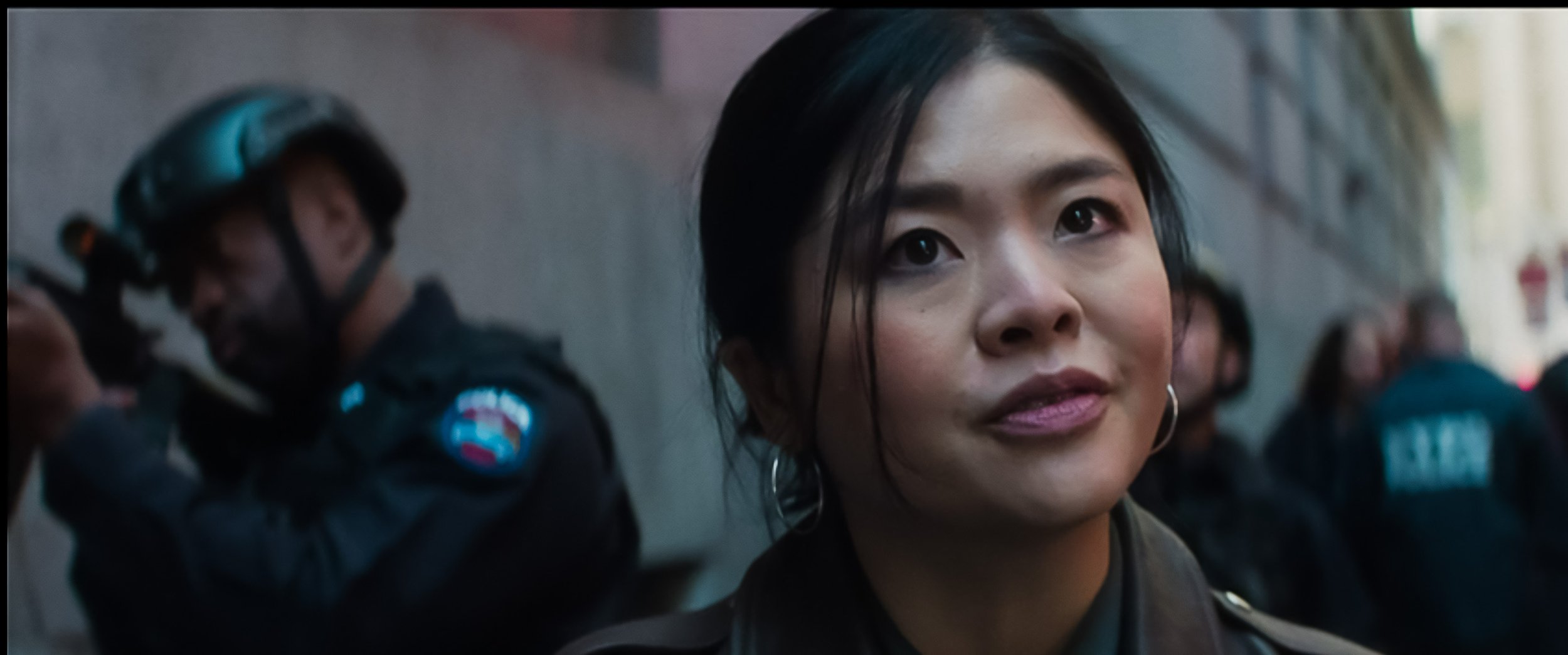
While the cops sweat outside and Devlin’s crew gets twitchy, Matt orchestrates a slow-burn takedown from inside the vault. Outside, Detective Kim — cool, competent, brand new to the series — is negotiating with a gang leader who wants a laugh before he sheds blood. So she tells one: something about a leprechaun mistaking a penguin for a leprechaun nun. And it lands. Devlin actually chuckles, the real kind, not the laugh-or-die kind, and gives her ten more minutes. Because this isn’t just a hostage crisis. It’s a show, and Matt knows how to play it.
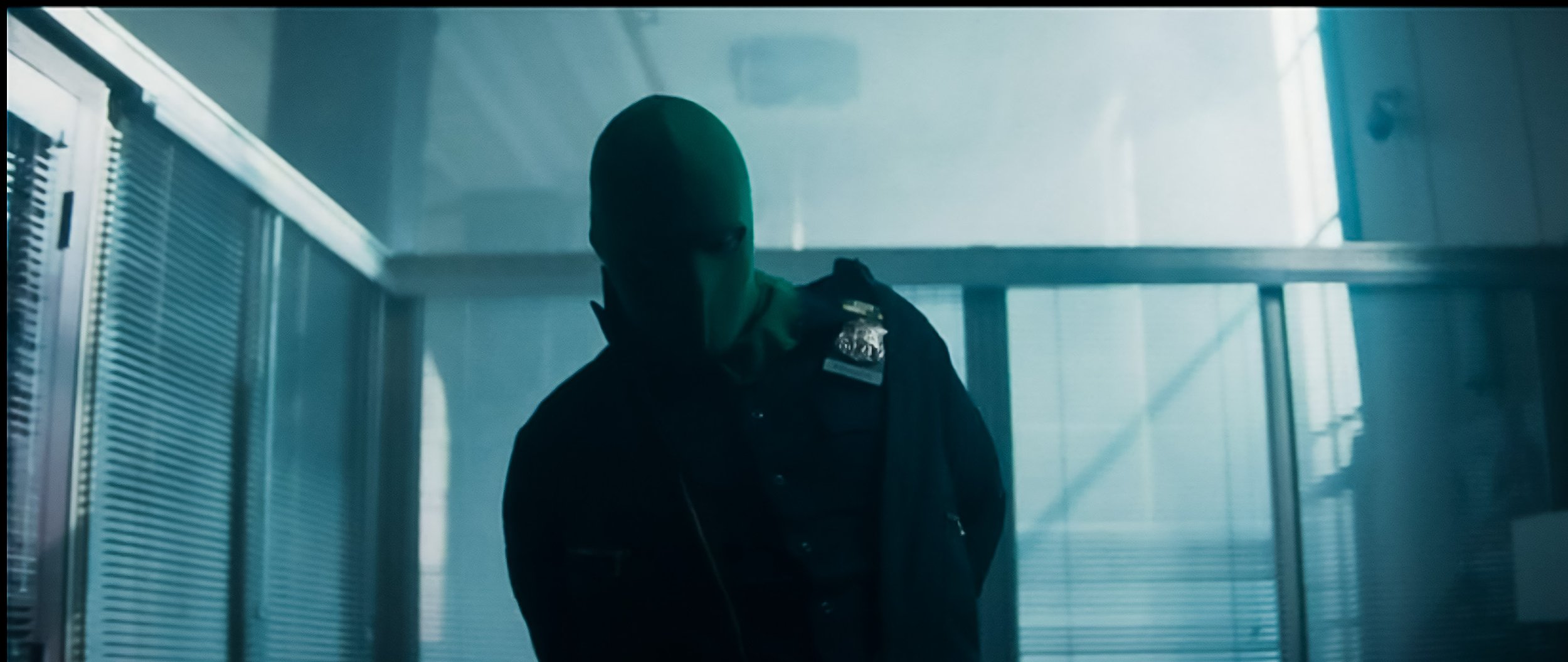
Inside, he works out that the real target isn’t cash; it’s a priceless diamond in a safety deposit box. Devlin didn’t come for bills and stacks — he came for the score. So Matt does what Matt does best, and flips the script: he hands Devlin the diamond just as SWAT kicks the door in. Chaos, screaming, disguises. Devlin slips out in a stolen cop uniform and passes the diamond to a random hostage like they’re staging a bad community-theater Ocean’s Eleven in Hell’s Kitchen.
Except Matt was watching. He’s always watching. So when Devlin thinks he’s clear, Matt meets him in an alley — no suit, no fanfare, just fists. And when the woman finally opens the pouch? No diamond. Just candy.
Matt Murdock swapped the diamond for a piece of candy. Of course he did. Daredevil doesn’t just win — he style-points his way through justice.
The kicker comes later, when Yusuf finds the real diamond tucked in a bowl of candy. Matt didn’t take it, didn’t sell it, didn’t stash it for a rainy day. He just made sure it got back to the right hands — quietly, cleanly, with zero need for credit. That’s justice with a smirk. With interest.
Justice With Interest
Justice in Hell’s Kitchen doesn’t come easy, and it doesn’t come clean. When it shows up at all, it’s usually bruised, bloody, and a little too late.
Not this time. The episode is titled “With Interest,” and that’s more than a banking pun (though we do love a theme). It’s a promise: this story doesn’t hand out justice flat, it compounds it.
Matt didn’t get the loan. The bank said no — the system said no, the spreadsheets and actuarial tables all said you’re doing too much good and not enough profit. So he worked outside the system, the way he always does. He walked into a hostage crisis, read a heartbeat, cracked a vault, handed the bad guy a diamond, took him down in an alley, and left candy in its place, because even his sense of irony is weaponized.
He didn’t do it to prove a point, and he didn’t do it to grandstand. He did it because people were in danger and he could help. That’s what justice looks like when the courts fail, when the banks fail, when the suits and committees smile and say sorry, we can’t help you. It looks like a blind man walking into the fire again, and again, and again — no cape, no applause, no fanfare. Just results.
When Yusuf finds the diamond at the end, he doesn’t say a word. He doesn’t need to. He knows. And maybe that’s enough.
The Devil Wears Empathy
Episode 5 didn’t need to move the plot forward. It didn’t need to connect to the multiverse, tease the next villain, or check a box on the MCU roadmap. It just needed to remind us why we care — why Daredevil isn’t another costumed brawler in a sea of superheroes, why Hell’s Kitchen still needs its devil.
It was a one-shot in a world that’s forgotten how to slow down, and it hit harder because it paused. Because it zoomed in. Because it trusted us to care about a man, a bank manager, and a diamond without needing to save the world.
You want to know who a character really is? Don’t throw them into a crossover. Trap them in a room, hand them a moral dilemma, and make them choose. Daredevil chose. He didn’t take the diamond — he took the risk, saved the people, and left a piece of candy behind, because sometimes the sweetest victories are the ones nobody sees coming.
The world doesn’t need bigger crossovers.
It needs more candy swaps.
Did this episode hit you the way it hit me? Comments are open below — or come yell about it on Threads.