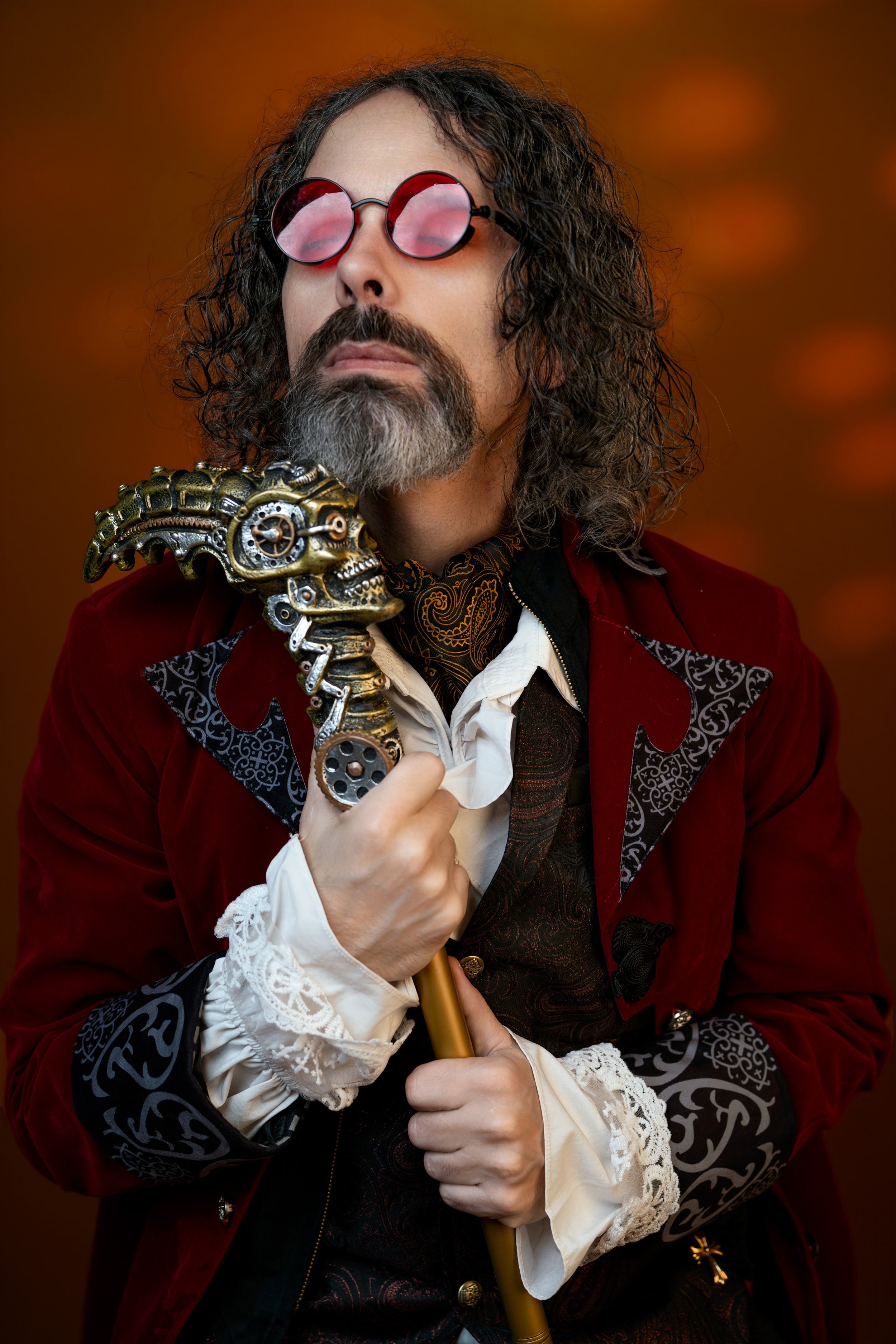
 A shift in angle can turn clutter into composition — and change the entire story a photo tells.
 I’m a very self-critical person. Whenever I show someone a photo — mine, or one of my photographer friends’ — I’m already studying their face for the reaction. And I started noticing that people would sometimes react badly. Not always, but enough to bother me.
I’m a bit of a poker player. (Not really — but I love board games, which is the same idea with a few dozen more rules. /s) So I could read it right there on their faces: I look short. I look weak. I look aggressive, in a bad way. And I’d automatically adjust to fix whatever the photo was saying about them. A lot of my fellow photographers don’t seem to think about this — or maybe nobody ever told them — so their subjects sometimes love the shot and sometimes don’t, and they never quite know why.
The difference, almost always, is perspective. It’s one of the most overlooked tools in photography, and the angle you shoot from completely changes how a subject reads — dominant, inviting, vulnerable, even unflattering.
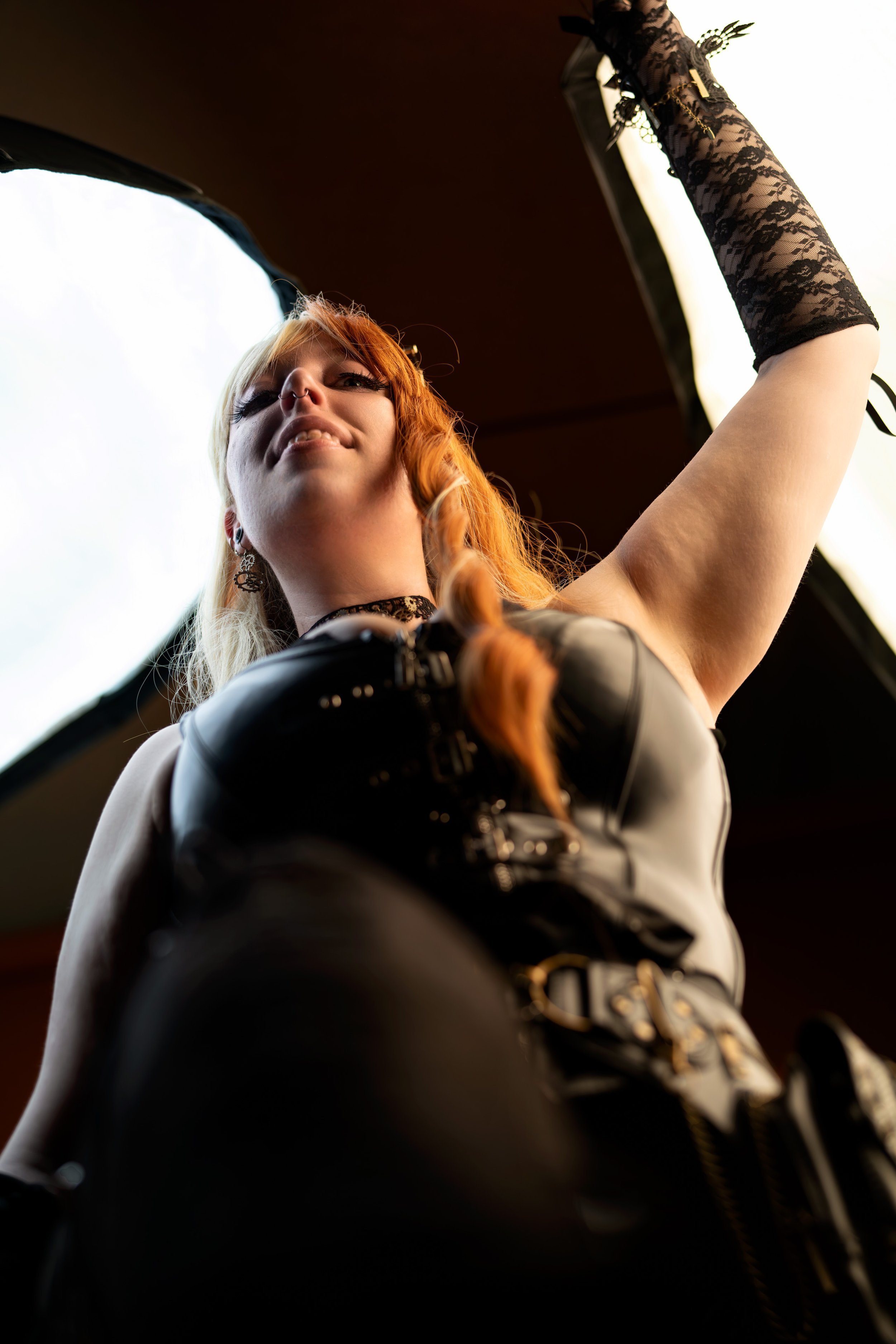
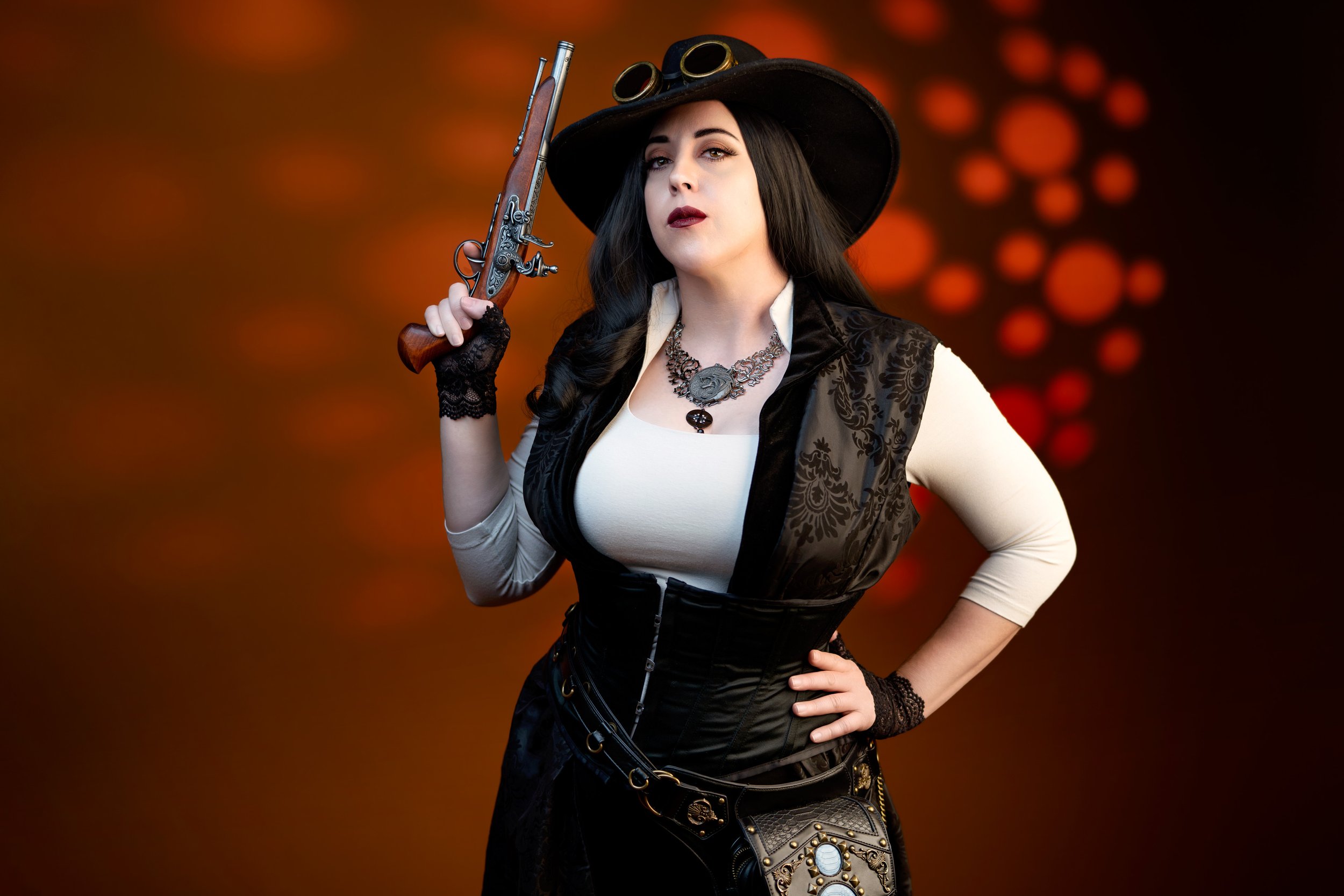
Take this shot of my wife, Snappy (@gingermortician). I made it lying flat on the ground, angling the camera up at her during my Steam and Shadows shoot at Spckrft Studio (@spckrft). The result? She looks powerful, larger than life, like a dominant figure straight out of a gothic steampunk fantasy.
Once you understand the psychology behind camera angles, it changes everything. So let’s break down how different angles shape perception, when to reach for each one, and why being intentional with perspective can make or break a shot.
What Angles Mean to the Viewer
Every camera angle tells a story. The moment you tilt up or down, you’re shaping how the subject is perceived — whether you mean to or not.
- Low angle (looking up): Position the camera below the subject and they look larger than life — powerful, authoritative, in control. It’s why action heroes, CEOs, and villains all get shot from below.
- High angle (looking down): Camera above the subject does the opposite, making them appear smaller, softer, sometimes vulnerable. Good for demure, innocent, or inviting portraits.
- Eye level: A neutral perspective that puts the viewer on equal footing with the subject. Great for natural portraits and storytelling shots, when you want connection rather than power.
Back to Snappy: the low angle wasn’t about her outfit, it was about making her look commanding. Shoot her from above and the whole tone flips — approachable instead of dominant. So when you pick up the camera, don’t only think about what’s in the frame. Think about how the angle makes the viewer feel.
Matching Perspective to Intent
The way you frame a subject should match the intent of the shot.
- For power and strength: Shoot from a low angle. It works for anyone — a hero standing tall, a musician owning the stage, or Snappy radiating gothic steampunk authority.
- For softness and approachability: A high angle flatters when you want the subject to read as inviting, warm, or sensual. Common in boudoir, portrait, and fashion work.
- For balance and connection: Eye level works best when you want the viewer on the same footing as the subject — candid, storytelling, documentary.
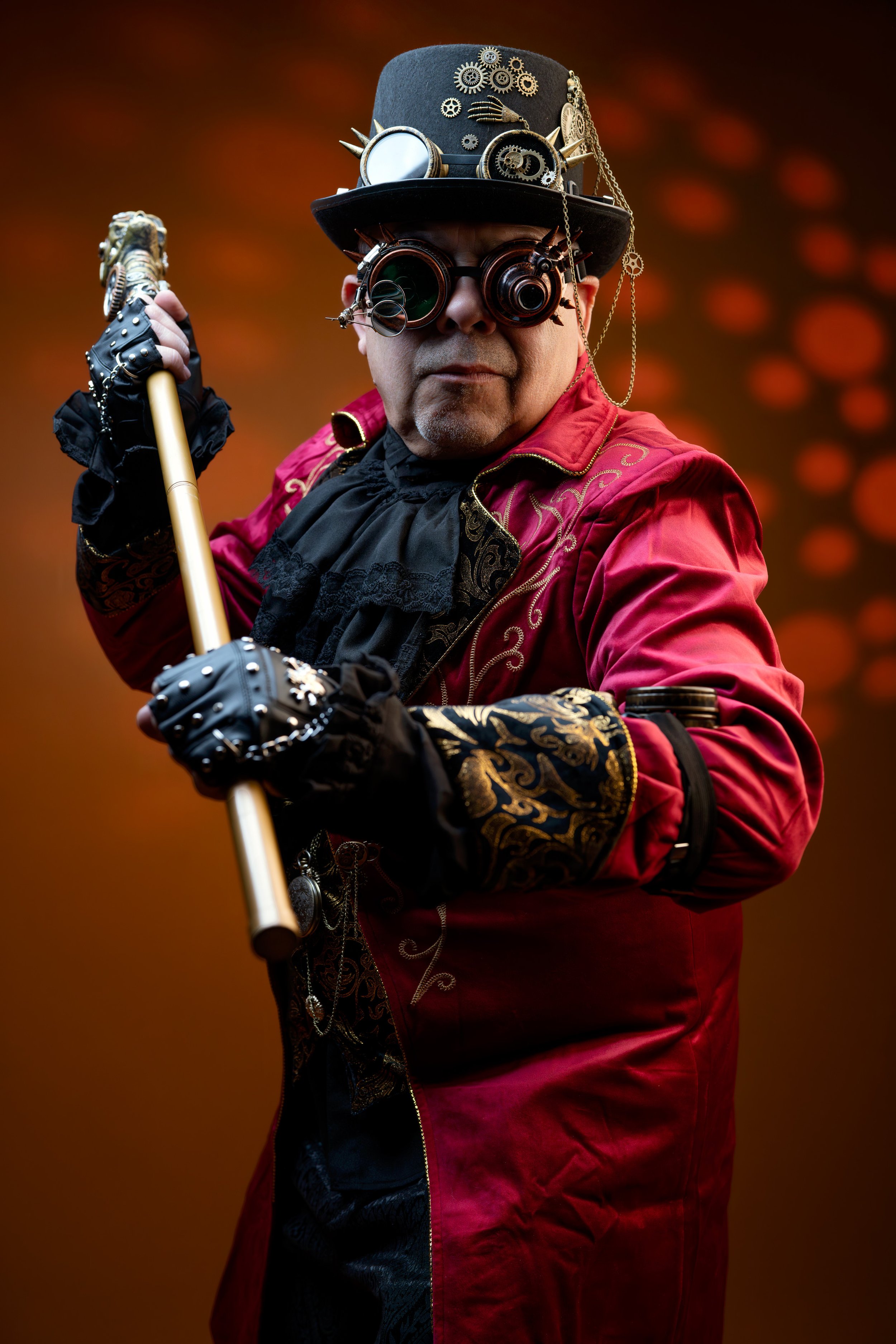
This isn’t abstract for me — it comes straight from the people in front of my lens. Most of the time a guy (or a dominant woman) wants to read as tall, strong, and confident, while a lot of women want the opposite: demure, soft, adorable. My male model friends want that power almost without exception, and they want neck separation too, which makes it my job to direct them — lean a little forward, tuck your chin a bit more than feels natural — while I hold the camera so it’s looking slightly up at them.
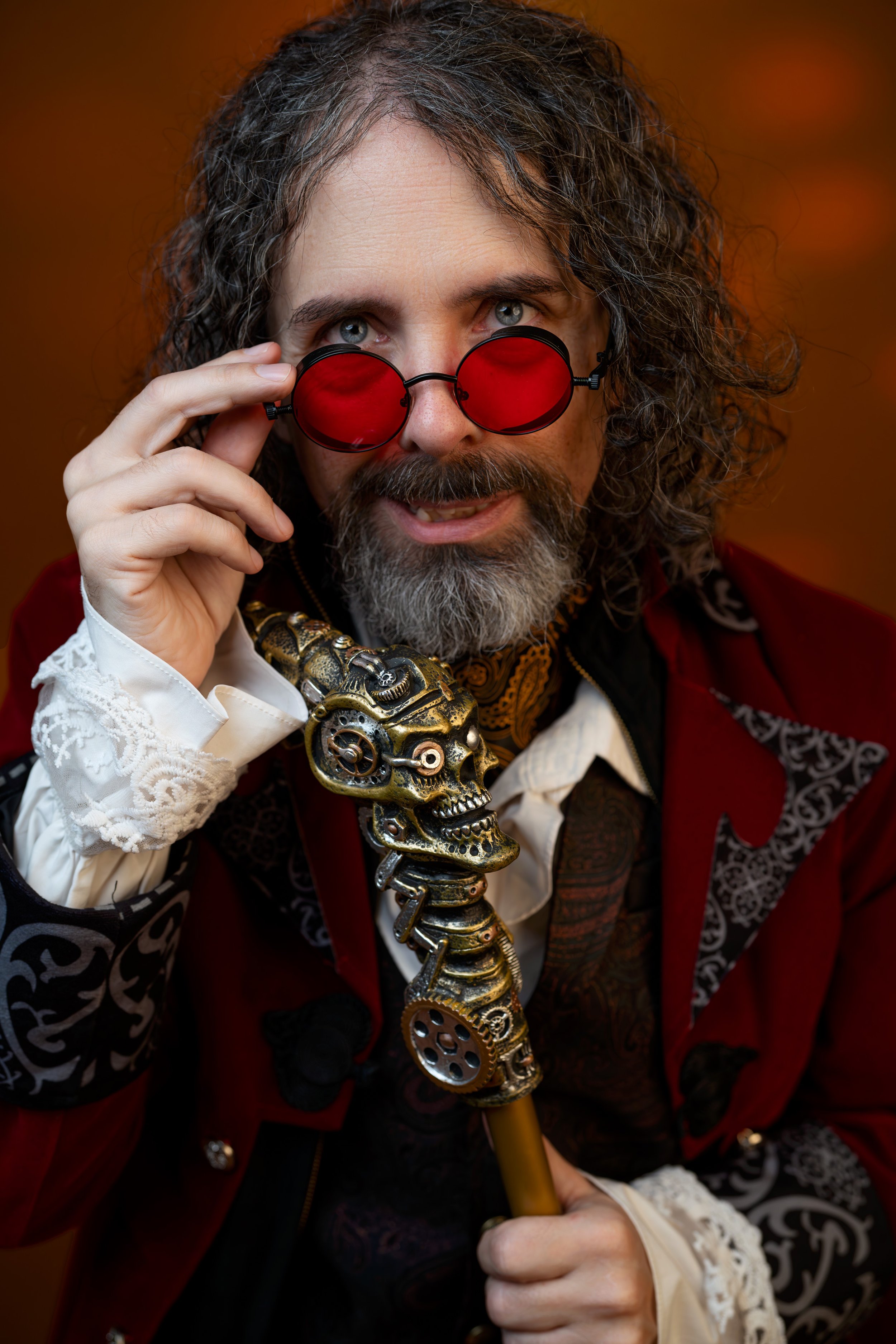
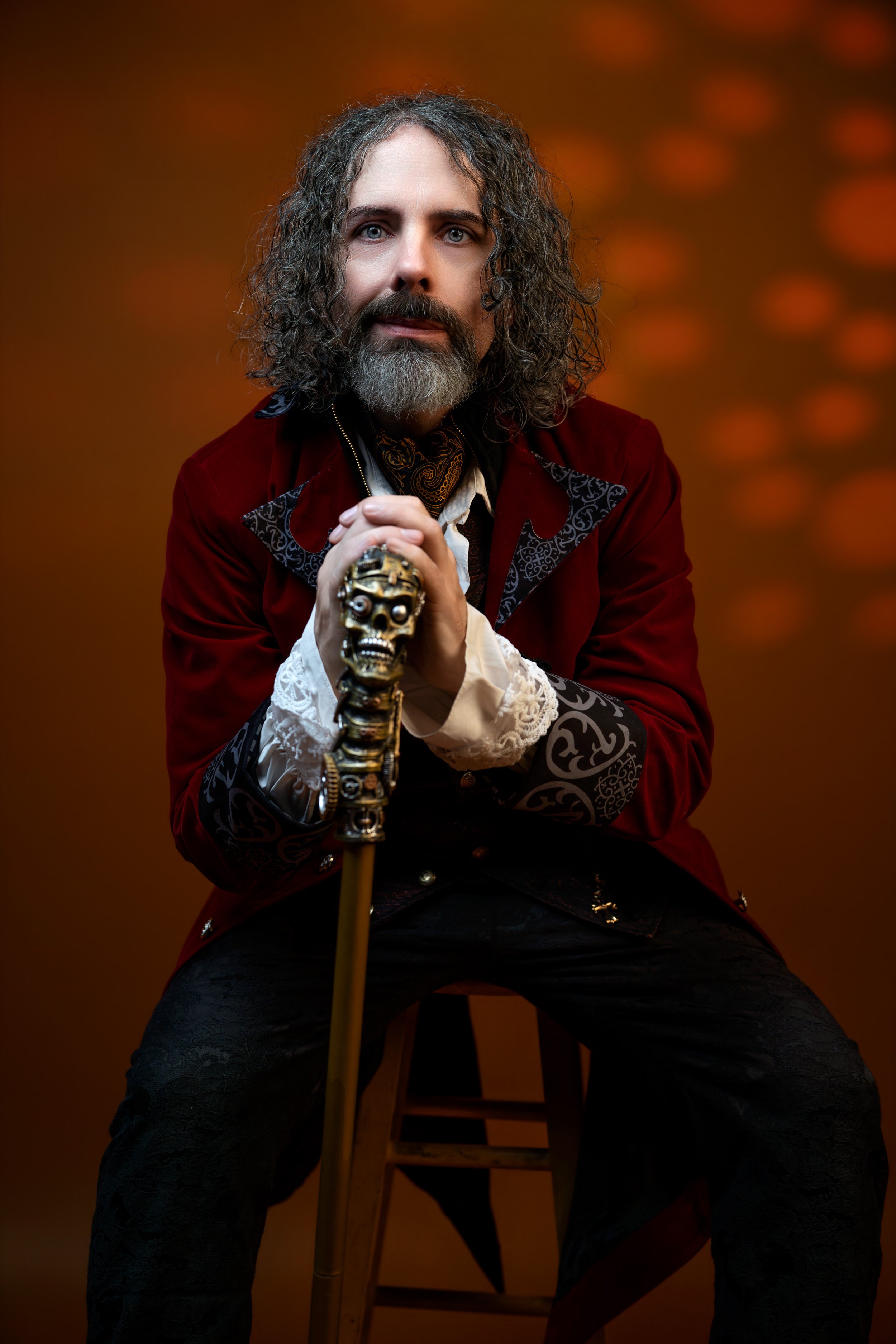
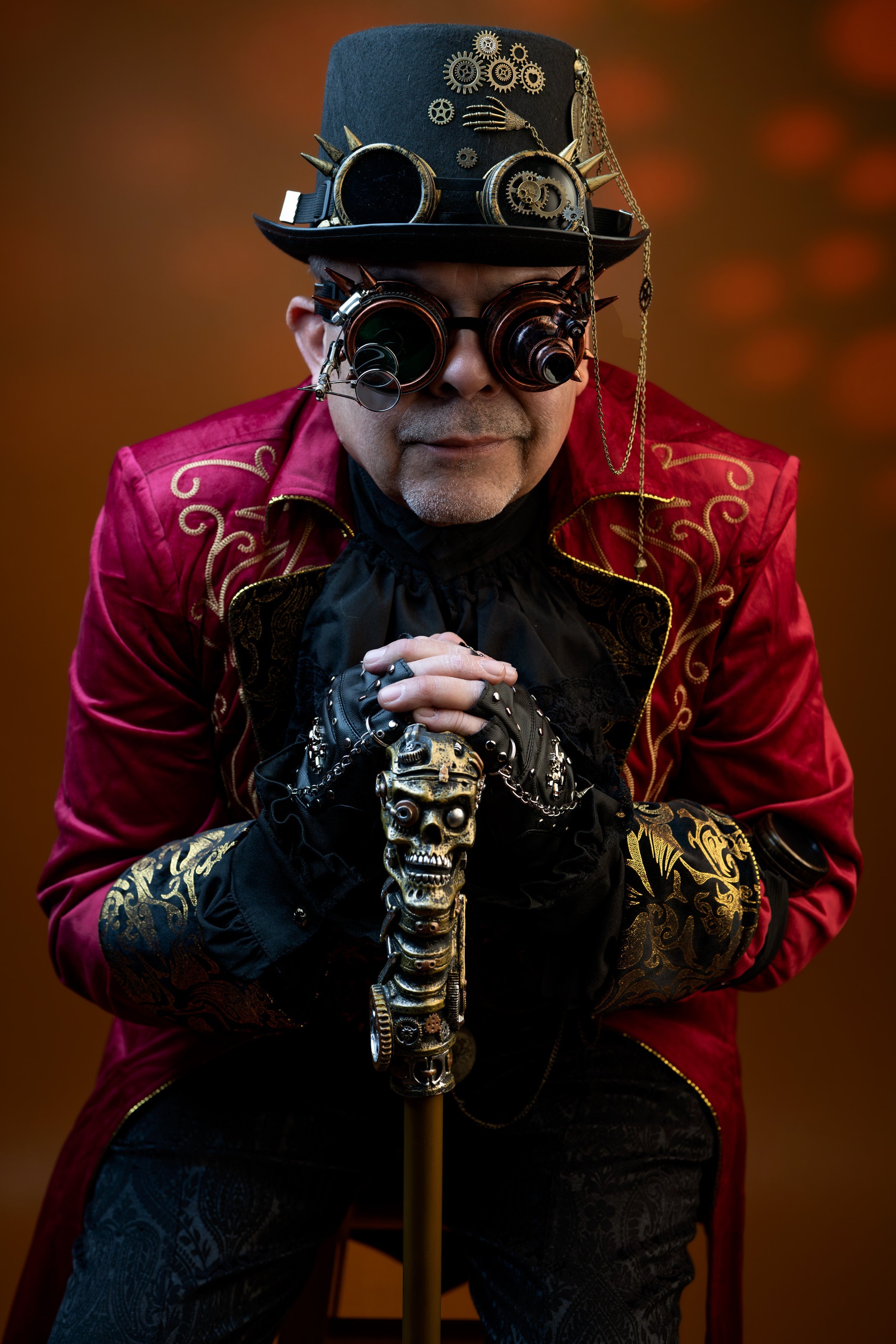
This self-portrait is shot from above me, but I still look strong — partly the facial expression, partly something about looking out over the glasses like this.
Here’s the fun part: you can break these rules, as long as you do it on purpose. Shoot a man from above and he can read as vulnerable or introspective, which is powerful in emotional storytelling. Shoot a woman from below and she can look dominant, like Snappy — but done carelessly, the same angle emphasizes unflattering lines. The key is intentionality: know the image you want, then choose the perspective that gets you there.
Avoiding Common Mistakes
Perspective is powerful, but it backfires when it’s accidental. A careless angle distorts proportions, highlights the wrong features, or sends a message you didn’t intend. A few traps to watch for:
- Low angles gone wrong: Shooting from below builds presence, but on the wrong subject it does real damage. My women model friends complain about it constantly — a careless low angle diminishes the cleavage they worked to present and erases the separation between chin and neck, showing their angles in all the wrong ways. It also emphasizes double chins, nostrils, and awkward foreshortening. If you do want a low angle, have your subject tilt the chin slightly down and engage their posture to hold the structure.
- High angles that undercut presence: A high angle can flatter, but it can also shrink someone. If they want to look strong or confident, angling down too far sends the wrong message.
- Ignoring the subject’s intent: Not everyone in front of the lens wants the same thing. Someone going for sexy is served by a high angle that plays up the eyes and collarbones; someone going for powerful needs a low one. Shoot without asking and you’ll miss what they actually wanted.
- Drama for its own sake: Sometimes an extreme angle is there just because it “looks cool,” not because it serves the subject. If it makes someone look disproportionate or pulls focus from the story, dial it back.
The point is simple: perspective should enhance the subject, not fight it. A good photographer isn’t only working the frame — they’re making sure every shot tells the right story.
The Technical Side: Settings and Setup
Perspective isn’t only about angle — the settings have to back it up. Here’s exactly how I made the Snappy shot, and why each choice mattered:
- Lens and focal length: 50mm on my Sony A7R V. A 50 gives a natural field of view without much distortion, which keeps a perspective-driven shot believable. Go wider (24mm) and you exaggerate the angle further — great for drama, risky for distortion.
- Aperture: f/1.8, for a shallow depth of field that isolates Snappy from the background and holds the eye on her. Wider (f/1.4) pushes that separation further; narrower (f/8) keeps more of the environment sharp if you want the room in the story.
- Shutter speed: 1/250s, fast enough to stay crisp and motion-free — which matters handheld, and matters more with dramatic poses where a small movement turns into blur.
- Lighting: Shot at Spckrft Studio (@spckrft) with multiple softboxes placed for directional, dramatic light. The placement deepens the mood and feeds the dominance of the low angle.
- Shooting position: Flat on the ground. That’s what gives the extreme low angle that makes her larger than life. If you try this, be ready to physically move — sometimes the best shot means getting a little uncomfortable.
And let me kill one excuse while I’m here: your height doesn’t matter. My camera — and every camera I know — lets you tilt the screen down, so I can hold it up over my head and still see the frame, or get flat on the floor and shoot up. Perspective was never about how tall the photographer is. It’s about choosing to care enough to get the angle right, even when it’s awkward for me, instead of taking the easy shot and hoping it works out.
Take both the settings and the perspective into account, and a simple portrait turns into something cinematic, striking, and intentional.
Gallery
Below are a few shots showing how angle and posture shift tone, drama, and clarity. All were taken within a 30-minute shoot, but each tells a different story just by changing position or camera height.